WELCOME IPS CHINA LIMITED

Rotary electrode relies on controllable forced convection to accurately simulate the liquid flow state in the plating tank. It is the core electrochemical test tool for copper plating mechanism, process optimization and additive evaluation. The following scenarios are described:
1. Basic mechanism analysis of copper ion mass transfer law
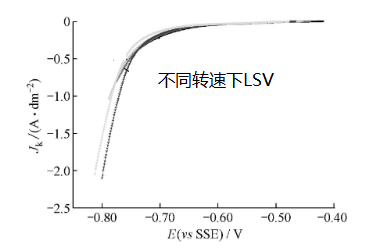
By changing electrode rotation speed, adjusting electrolyte convection intensity, measuring limiting diffusion current, calculating Cu² diffusion coefficient and diffusion layer thickness. The mass transfer limits of copper ions at different concentrations and temperatures were determined to determine whether plating was controlled by mass transfer or charge transfer.
Study on Sedimentary Dynamics
Combined with polarization curve and cyclic voltammetry (CV), the activation energy and reaction order of copper deposition/dissolution were analyzed, and the stepwise reaction process of copper electrodeposition was analyzed, and the two-step reduction behavior of Cu² →Cu and Cu →Cu was distinguished.
Interface Electric Double Layer and Adsorption Behavior
The adsorption of solvent and anion (SO ², Cl) on copper electrode surface was studied, and their effects on deposition potential and interface impedance were judged.
2 Electroplating additive evaluation (the most core application) electroplating copper (PCB electroplating, blind hole copper filling, decorative copper plating, semiconductor wafer copper plating) highly dependent on brighteners, leveling agents, inhibitors, carriers four categories of additives, RDE/RRDE is the mainstream screening method:
Single additive performance verification
Inhibitor: observe the negative shift of deposition potential and current caused by additive adsorption, evaluate the inhibition ability and adsorption stability;
Brightening/leveling agent: analyze its regulation effect on crystallization overpotential and grain growth, and predict the brightness and flatness of coating.
Compatibility of additive mixture system
The polarization behavior and current distribution under different ratios were tested to screen the optimal combination of synergistic effects and avoid additive antagonism failure.
Additive Consumption and Life Assessment
Long-term potentiostatic/galvanostatic rotation test, monitoring electrochemical signal changes, judging the decomposition and consumption rate of additives, guiding the replenishment cycle of industrial bath liquid.
 open the phone and scan
Copyright © 2012-2018 IPS CHINA LIMITED. all rights reserved 京ICP备19002103号-1
 简体中文
简体中文 English
 德语
德语